

How to Sleep Better Tonight: 5 Proven Tips
How to Sleep Better Tonight: 5 Proven Tips
Tossing and turning again? You’re not alone.
Poor sleep affects 45% of Australians regularly. But here’s the thing – you don’t need expensive gadgets or complicated routines to fix it.
Tonight could be different.
These five evidence-based strategies have helped thousands of my health coaching clients transform their sleep quality. And they’ll work for you too.
Why Sleep Quality Matters More Than You Think
Your sleep impacts everything.
Energy levels. Mood. Weight management. Immune function. Even your ability to make good nutrition choices.
When you’re sleep-deprived, your body produces more ghrelin (hunger hormone) and less leptin (fullness hormone). This hormonal imbalance makes you crave junk food and overeat.
Poor sleep also elevates cortisol levels. High cortisol wreaks havoc on your stress management abilities and overall wellness.
The good news? Small changes tonight can create big improvements tomorrow.
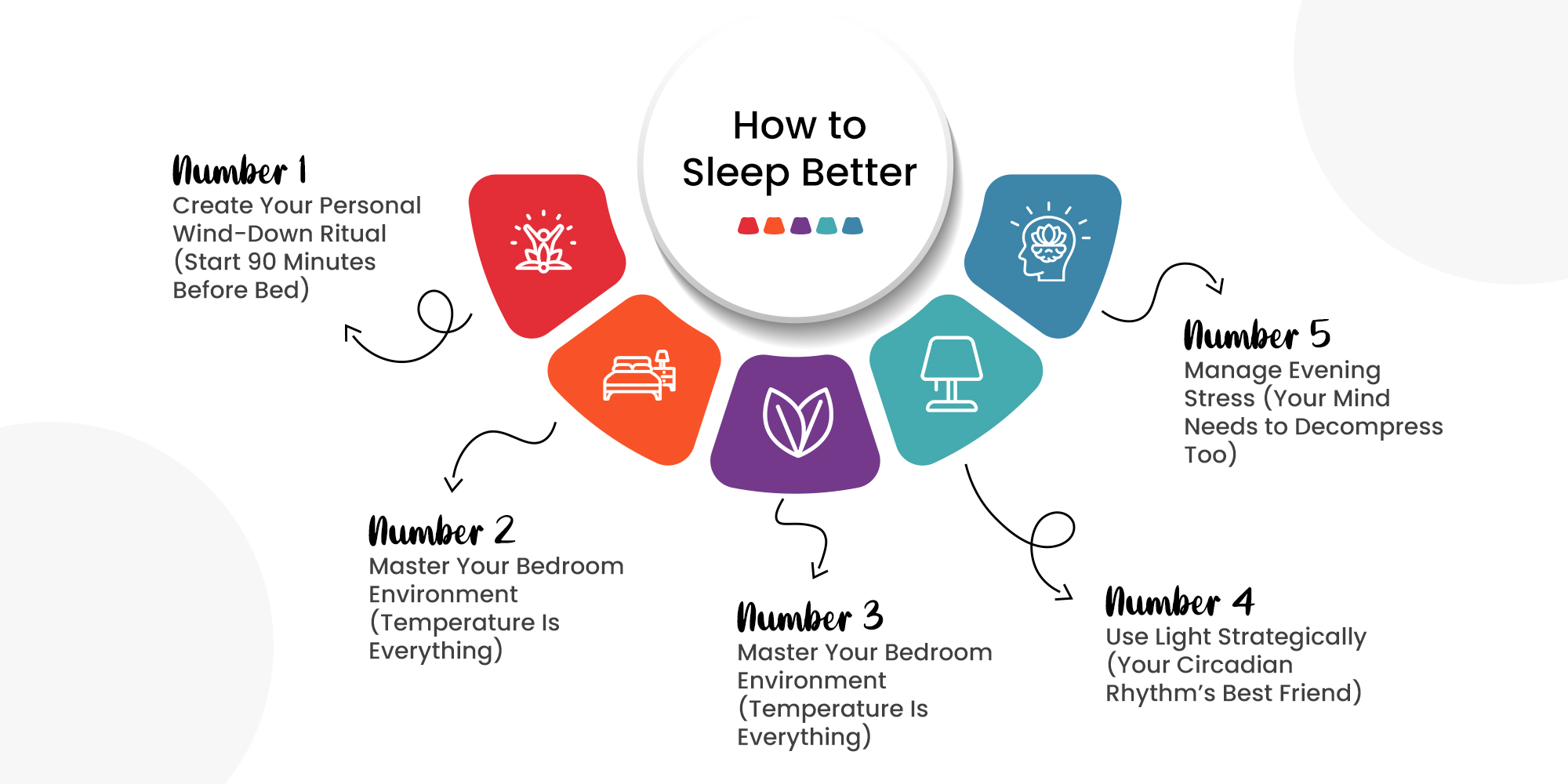
5 Tips to sleep better
Tip #1: Create Your Personal Wind-Down Ritual (Start 90 Minutes Before Bed)
Your brain needs a clear signal that bedtime is approaching.
Most people jump straight from Netflix to bed. Then wonder why they can’t fall asleep.
Here’s what works:
90 minutes before bed:
- Dim the lights throughout your home
- Switch devices to night mode (or better yet, put them away)
- Start your relaxation routine
Your ritual might include:
- Gentle stretching or yoga
- Reading a physical book
- Meditation (even 5 minutes helps)
- Herbal tea (chamomile or passionflower)
- Journaling three things you’re grateful for
Pro tip from my wellness coaching practice: Keep it simple. Pick 2-3 activities max. Consistency beats complexity every time.
Tip #2: Master Your Bedroom Environment (Temperature Is Everything)
Your bedroom should be a sleep sanctuary. Not a multipurpose room.
Temperature: 16-19°C (60-67°F) is optimal. Your core body temperature naturally drops before sleep. A cool room supports this process.
Darkness: Invest in blackout curtains or a quality eye mask. Even small amounts of light can disrupt melatonin production.
Noise: Use earplugs or a white noise machine if needed. Sudden sounds, not constant noise, wake you up.
Quick bedroom audit:
- Remove electronics (yes, even your phone charger)
- Check your mattress age (replace every 7-10 years)
- Consider your pillow height (supports natural neck alignment)
- Keep it clutter-free
Personal insight: I’ve worked with hundreds of clients on behavior change. The ones who prioritize their sleep environment see faster results in energy and vitality improvement.
Tip #3: Time Your Nutrition for Better Sleep (What and When Matters)
What you eat affects how you sleep. When you eat matters even more.
3-4 hours before bed: Finish your last large meal. Late dinners force your digestive system to work when it should be winding down.
Foods that support sleep:
- Tart cherries (natural melatonin)
- Almonds and walnuts (magnesium)
- Fatty fish like salmon (omega-3s)
- Kiwi fruit (serotonin precursors)
Foods that sabotage sleep:
- Caffeine (obviously, but it stays in your system 6-8 hours)
- Alcohol (disrupts REM sleep)
- Spicy foods (can cause heartburn)
- Large amounts of liquid (hello, midnight bathroom trips)
From my holistic health coaching experience: Women often struggle more with sleep during hormonal changes. Balancing blood sugar through proper meal timing becomes even more critical.
Tip #4: Use Light Strategically (Your Circadian Rhythm’s Best Friend)
Light is your body’s primary time cue. Use it wisely.
Morning: Get bright light within 30 minutes of waking. Step outside or sit by a window. This sets your circadian clock.
Evening: Dim artificial lights 2-3 hours before bed. Blue light from screens suppresses melatonin by up to 50%.
Light strategies that work:
- Morning sunlight exposure (even 10 minutes helps)
- Blue light blocking glasses for evening screen time
- Salt lamps or warm-toned bulbs for evening lighting
- Blackout curtains for complete darkness
Clinical insight: Shift workers and frequent travelers benefit most from strategic light exposure. It’s like pressing reset on your internal clock.
Tip #5: Manage Evening Stress (Your Mind Needs to Decompress Too)
Racing thoughts kill good sleep. Your stress management routine is just as important as your bedtime routine.
The 4-7-8 breathing technique:
- Inhale for 4 counts
- Hold for 7 counts
- Exhale for 8 counts
- Repeat 4 times
Progressive muscle relaxation: Starting with your toes, tense each muscle group for 5 seconds, then release. Work your way up to your head.
Stress-busting evening activities:
- Gentle movement or stretching
- Meditation apps (Headspace, Calm)
- Warm bath with Epsom salts
- Essential oils (lavender, bergamot)
- Brain dump journaling
Coaching observation: People with chronic conditions often carry extra stress about their health. Creating a worry-free bedtime zone becomes essential for both sleep and healing.
Your Sleep Transformation Starts Tonight
Here’s your action plan:
Tonight:
- Set your bedroom temperature to 18°C
- Start dimming lights 90 minutes before desired bedtime
- Try the 4-7-8 breathing technique
This week:
- Create a consistent wind-down routine
- Remove screens from your bedroom
- Time your last meal 3-4 hours before bed
This month:
- Track your sleep patterns (noting what helps/hurts)
- Optimize your bedroom environment completely
- Establish morning light exposure habits
When to Seek Professional Help
Sometimes lifestyle changes aren’t enough. Consider seeing a healthcare professional if you experience:
- Persistent insomnia (trouble sleeping 3+ nights per week)
- Loud snoring or breathing interruptions
- Excessive daytime sleepiness despite adequate sleep time
- Sleep issues affecting your work, relationships, or health
Professional perspective: As someone who’s worked in wellness and fitness coaching, I’ve seen how proper sleep amplifies every other health effort. Better sleep improves workout recovery, supports healthy eating choices, and enhances stress resilience.
The Bottom Line
Quality sleep isn’t a luxury. It’s the foundation of optimal health, energy, and vitality.
You don’t need to implement all five tips tonight. Pick one that resonates most with you. Master it. Then add another.
Small, consistent changes create lasting behavior change.
Your future well-rested self will thank you.
Ready to transform your sleep? Start with tip #1 tonight. Your body will notice the difference within days.
Looking for personalized guidance on improving your sleep and overall wellness? Book a consultation to create a customized plan that fits your lifestyle and health goals.